



Japan, a little closer. Places · objects · everyday stories
Souvenirs
The stories behind a souvenir T-shirt
A closer look at beckoning cats, auspicious motifs, Hokusai and Kuniyoshi.
English summary—not a full translation. Read the full Japanese feature →

A souvenir design can be a starting point for curiosity. You do not need to memorize its whole history to enjoy it.
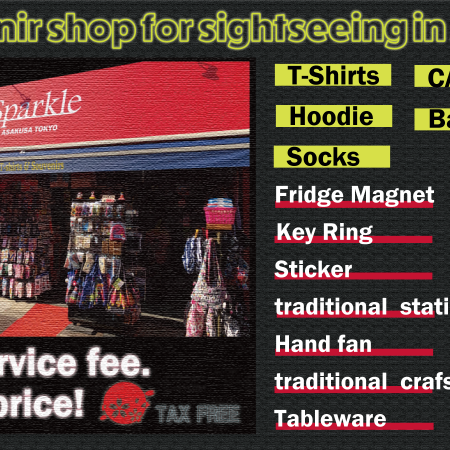
Published by KANETOMI, operator of SPARKLE. Links to the SPARKLE online store promote our own products. This source-based guide is not a report of an on-site visit.
Wishes made visible
Maneki-neko are associated with wishes for good fortune. GO TOKYO describes the raised right paw as welcoming money and the left as welcoming people. Treat these as popular beliefs, not guarantees. SPARKLE’s interpretation of a high-raised paw reaching toward the wider world is a meaning attached to its own design.
Crane, turtle, pine, bamboo and plum motifs also appear on historical objects. A mid-Edo-period go board in the Chokokan collection uses auspicious designs suited to wedding furnishings. They offer a way to think about the wishes behind a gift.
Sources: GO TOKYO Tokyo Travel Guide 2024 江戸のラッキーアイテム 8–9頁 · 徴古館 梨子地松竹梅鶴亀蒔絵碁盤 碁笥添
Look beyond the familiar image
In Hokusai’s Under the Wave off Kanagawa, look past the wave for Mount Fuji and the boats. The Sumida Hokusai Museum dates the print to around 1831 and identifies the boats as vessels carrying fresh fish to Edo. Compare it with Fine Wind, Clear Morning, known as Red Fuji, from the same series.
Kuniyoshi’s huge skeleton belongs to a supernatural story, not a literal historical record. The three-sheet print dates to the 1840s; museum catalogues differ on a more precise date. Look at the scale of the skeleton and the human figures, then decide what catches your eye.
Sources: すみだ北斎美術館 冨嶽三十六景 神奈川沖浪裏 · すみだ北斎美術館 冨嶽三十六景 凱風快晴 · Spencer Museum of Art 国芳の骸骨の三枚続 · 東京都美術館 The UKIYO-E 2020 作品リスト 446 相馬の古内裏
Choose a story you want to share
For a gift, begin with the design you like and explain your reason in a sentence. The conversation can become part of the souvenir.
Useful next step
English summary of the Japanese feature, not a full translation. Sources checked on 26 October 2026.
Sources & checking this guide
- GO TOKYO Tokyo Travel Guide 2024 江戸のラッキーアイテム 8–9頁
- 徴古館 梨子地松竹梅鶴亀蒔絵碁盤 碁笥添
- 東京国立博物館 能のデザインにみる吉祥模様 2014年の展示記録
- すみだ北斎美術館 冨嶽三十六景 神奈川沖浪裏
- すみだ北斎美術館 冨嶽三十六景 凱風快晴
- Spencer Museum of Art 国芳の骸骨の三枚続
- 東京都美術館 The UKIYO-E 2020 作品リスト 446 相馬の古内裏
Linked official sources were checked for the editorial content on 26 October 2026. Opening times, shop stock and travel conditions may change; use the current official pages.